Dual Occupancies
Dual Occupancy - Approved in principle! (Labor opposes)
June 2025
At Council’s marathon June meeting that went until past midnight, and with a full and very patient gallery who waited for three hours for this item to be debated, Council approved my Notice of Motion to permit Detached Dual Occupancies after seven years of delay and disappointment with our moribund LEP process. There’s some way to go yet. The proposal now needs to be presented to the local Planning Panel, the State government’s gateway process, and be placed on public exhibition. Despite this, staff admit that this change may still beat the LEP to the finish line, which is precisely my intention. Thanks to the passionate public speakers, and to my colleagues who endorsed this almost unanimously, with the exception of the Labor Councillor Amanda Kotlash.
August 2025 Update
After some work by Council staff, we dispatched the ‘Planning Proposal’ I advanced at the June meeting to give landowners in RU1, RU2, RU4, RU5, C3 and C4 zones additional flexibility to site detached Dual Occupancies on their land, under one title (no subdivision). I am very pleased that the Chamber voted unanimously (this time) to advance it to the State Government’s “Gateway” process. The waiting game began, but I remained confident that the State government will look favourably on it.
Then, I got unexpected calls from two old friends and colleagues. The first was Mark Hornshaw, a former Hawkesbury lad and now Councillor on Port Macquarie-Hastings Council. He had seen what we started in the Hawkesbury and wanted to move a similar motion at his Council. He did, and it passed.
The next call was from John Ruddick. Mark, John and I are all ex-Libs, with John going on to unexpected but pleasing success being elected to the NSW Upper House as a member of the Libertarian Party. He felt that what we started in the Hawkesbury is such a good idea, it should be implemented state wide. I was chuffed.
The “Select Committee on Rural Housing and Second Dwellings Reform” was supported unanimously by both major parties and the crossbench, making the opposition of our sole local Labor Councillor even more baffling.
It has recently held both hearings in Parliament House and a site visit to the Hawkesbury, which I was pleased to attend in order to advocate for the reform. Here is our Council’s Manager of Strategic Planning, Andrew Kearns, appearing before a hearing on December 20th.
December 2025 Update
Council were advised on the 13th of November that the Planning Proposal initiated by my motion has been conditionally approved. Councillors were not informed; I was advised by local planning expert Troy Myers (and a great advocate for this reform) that the approval was up on the NSW Planning Portal.
IRD25_29124 Attachment C - letter to Council - Gateway Determination - Dual Occupancy Planning Proposal_ PP-2025-1561I am heartened by this quote from the gateway approval:
“The Department concurs with the Local Planning Panel’s assessment that the planning
proposal has strategic and site-specific merit, provided further consideration is given to
(amongst other things) land use conflict is appropriately addressed; the preparation of a
comprehensive new development control plan chapter to assist in guiding appropriate
future development; and, demonstration that the proposal aligns with the recently
completed Hawkesbury Nepean Flood Study (Reconstruction Authority) (June 2024).
• On balance, the planning proposal holds social and economic benefits.Subject to conditions being met, it is the Department’s assessment that environmental
impacts can be prevented or appropriately managed.
• Further, subject to conditions being met, the proposal is not necessarily inconsistent with
the Regional Plan, District Plan and local planning policies and strategies.
• A planning proposal is the appropriate pathway to achieve the intended outcomes of the
planning proposal, subject to conditions.”
January 2026 Update
On January 2nd the ABC News highlighted property owners in the Hawkesbury who want more flexibility for Detached Dual Occupancy.
This print article accompanied the video story.
February 2026 Update
John Ruddick posted a video about Parliament resuming and the visit he made to the Hawkesbury and where he visited property owners who want more flexibility for Detached Dual Occupancy.
Here is John’s social media post.
So what happens next?
Council will do work between January and August 2026 to satisfy the additional requirements stipulated by the Department of Planning. The final version will be put out for public exhibition and comment from agencies. The Department has imposed a deadline of August 2026 to finalise the matter. I will be asking staff how well we can beat this deadline.
Looking back – How we got here
I’ll close by pointing you to an earlier video explainer and post I made where I laid out the issues and where we needed to move to.
In September 2021 I posted the following video and website post:
I offer this to illustrate how we pursue important or complex reforms. It takes a while, and takes persistence and a lot of networking. I am hopeful of a good result in 2026.

Granny Flats: You deserve more choice | Hawkesbury City Council
I want to talk about granny flats and dual occupancies, because the way that Hawkesbury Council currently treats them is insane.
A dual occupancy is just a fancy way of saying there are two houses on the same block of land, but under one title, one owner.
It’s not like a subdivision because there’s no rezoning, no sale, or separation of the ownership of the land.
There are two kinds of dual occupancies: Detached, where there’s two, separated full-size houses on the same block, and attached where two dwellings are connected in some way, like a Duplex.

I live in an attached dual occupancy here at Oakville with my family, where we have two houses which are connected by a covered walkway.
And here’s the crazy thing: At Hawkesbury Council, detached dual occupancies are forbidden because of, wait for it, flood evacuation risks. And that's regardless of whether you’re in Bilpin or Oakville, well out of harms way of a flood. But put that covered walkway in, and everything’s peachy. Totally fine. Permitted.
Detached dual occupancies are already permitted (with constraints) in many other Councils, like Penrith, Hills, Cumberland, Parramatta, Northern Beaches.
But it gets worse: People often get confused between Dual Occupancies and “secondary dwellings”.
Secondary dwellings are much smaller, only up to 60 square meters- which is little more than 1 or 2 rooms, and must be close to the primary dwelling. We call them “Granny flats”.
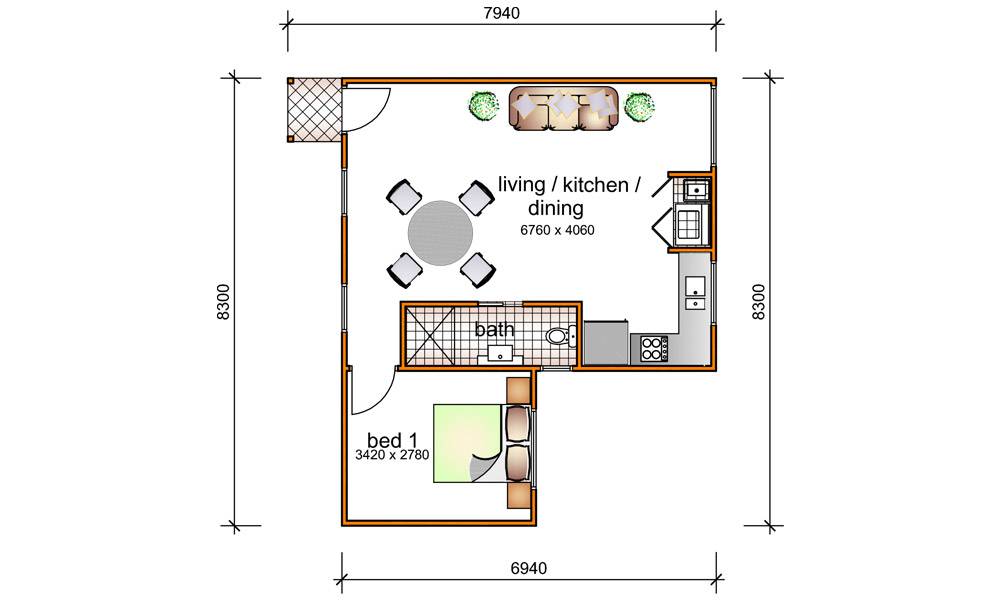
Now if you want to build a granny flat in, say Bligh Park, or Hobartville, in any of these residential zonings, on a block that’s under 800 square meters, apparently that’s fine.
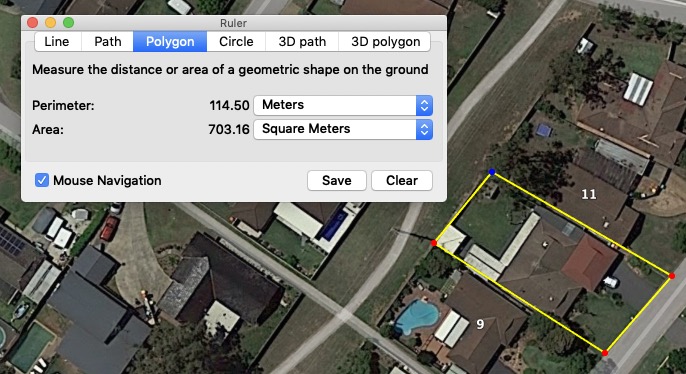
But if you live in one of these zonings in a rural area, like a five acre block, 25 times the size of a house block in Bligh Park, the answer is no. You can’t. It’s not allowed.

This makes no sense at all.
During this this term of Council I have been the strongest advocate for reform of these rules, but I’ve been stymied by a lack of support among the other Councillors.
I’m seeking your support to continue this work through your vote in the upcoming election.
Let me explain why this is important:
For a balanced community, the Hawkesbury needs a mix of housing types. I’ve argued that dual occupancies confer a range of social benefits.
Your ability to put another dwelling on the land that you own could allow you as parents to give a leg-up to your kids to build a home, or get equity in the market, or to continue to live in the communities that they grew up in, or to enable grandparents to care for their grandkids.
On the flipside, it might allow you to look after your parents in their senior years with a degree of independence, but still close to those they love, sharing the burdens of property maintenance or the costs of living.
The way that my family lives exemplifies this: I live in a multigenerational household, with toddlers, teens, adults, seniors, spaniels and cats living together in a joyous chaos.
This 2020 article from the Sydney Morning Herald on multigenerational households really resonated with me.
I’ve heard this described as a very European way of living. It’s not for everyone, but for many families it makes a lot of sense. For some, it’s an economic necessity.
But ultimately it’s about choice. Your choice.
Studies show that one in five households are multi-generational, and that figure is growing (Source: City Futures Research Centre, UNSW Dept of Built Environment). And 40% of people in their twenties are still living at home (Source: Australian Institute for Family Studies).
To me, it’s an example of how something obscure – good planning laws, can strengthen our communities by empowering Council to plan for diversified housing choices with far less impact on existing services and infrastructure than full blown subdivision.
Others support secondary dwellings because it represents a form of affordable housing, which we badly need more of.
Lastly, we can’t ignore the fact that many acreage areas are and will continue to be subjected to development pressure. I. am.no.fan.of.overdevelopment.
But dual occupancies may represent a kind of happy compromise between the status quo, and the wholesale rezoning and carve-up that developers want to inflict on us.
Many people I speak to want a sensible solution like this, but I challenge you to find another Councillor that can point to a public statement they’ve made in support of it.
And you and I probably know someone in the area with a clandestine granny flat that’s offending nobody but against the rules.
In February this year, Hills Shire Council next door took advantage of a change in State rules, something called the ‘LEP Standard Instrument’ to apply for, and get, a more generous definition of Granny flats.
As a result, Hills landowners can now build granny flats that are still modest, but larger than before: whichever is the larger of 110 square meters or 20% the size of the main dwelling, up from 60 square meters.
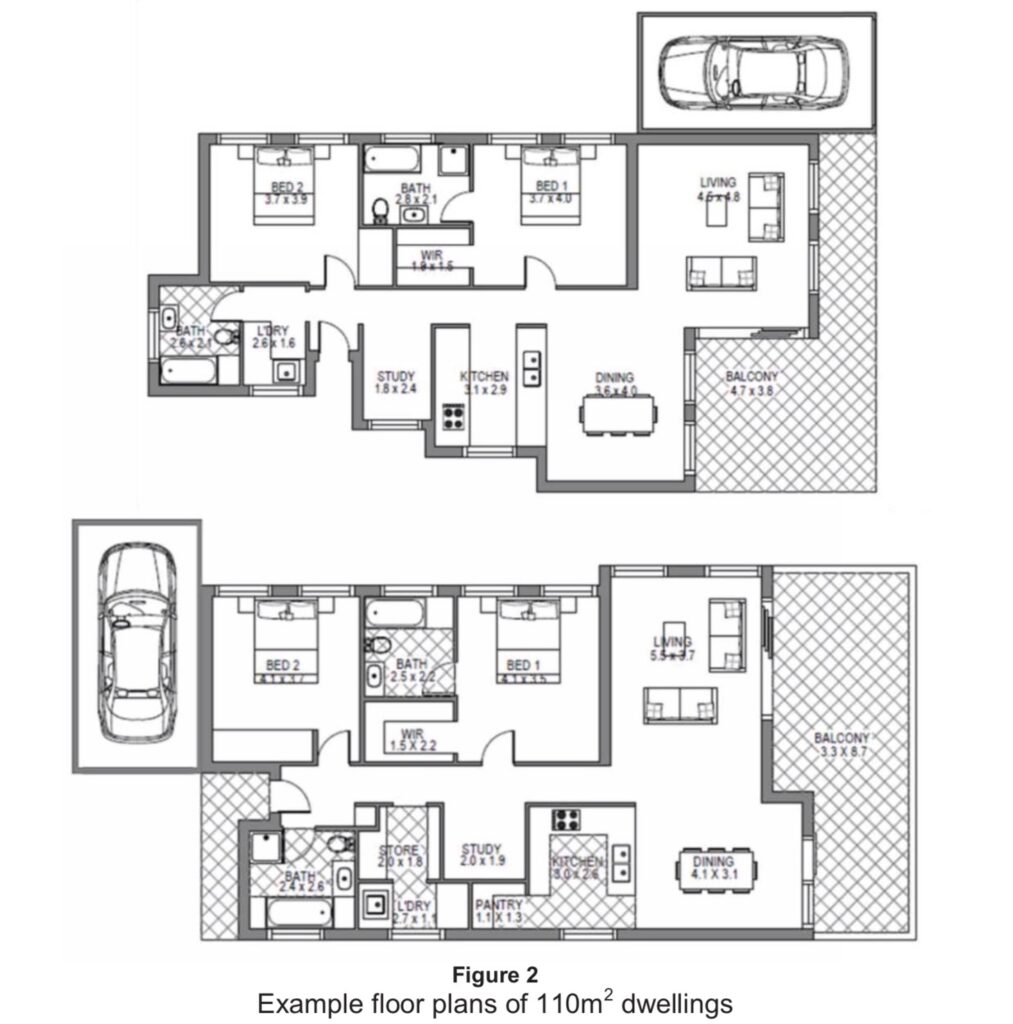
I’d like Council consult and consider doing the same, using a place-based approach that’s sensitive to all the factors and constraints, like land fragmentation, loss of agricultural capacity, emergency evacuation, local roads & infrastructure and the protection of the environment.
As I said, I’ve tried to drive reform in this area and so far I’ve failed.
Our best hope is the detailed work Council has done this year in revamping our LEP and DCP – our two fundamental planning codes, but progress has been been painful and slow.
I’ve pushed for these proposals to be put into the new codes for public comment, but it’s the next Council that will sign them off.
I’d love to hear your views. What do you think?