
The forgotten history of Scheyville and Pitt Town
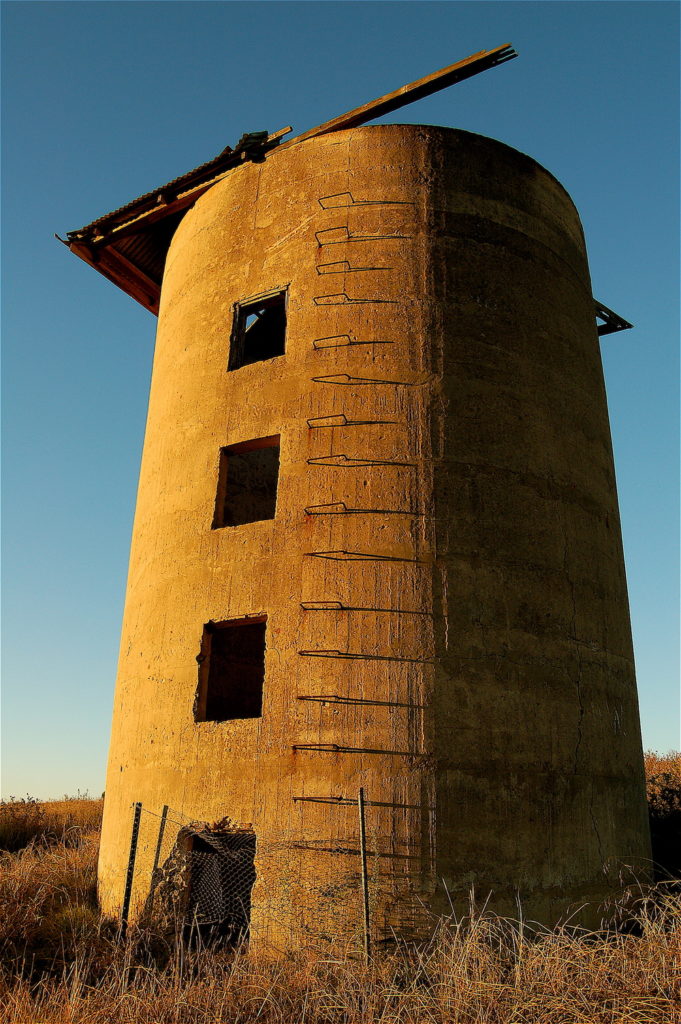
I value our wonderful history here in the Hawkesbury, and as a Councillor I want to do what I can to help other people get excited about it too. The late Dr Stubbs, when he was on Council was always a wonderful exponent of our history, and wrote extensively on many local topics, as well as being President of the Hawkesbury Historical Society. One subject that was very dear to him was the history of the Pitt Town, Scheyville and Oakville areas, since this is where he (and I) grew up.
Before Christmas, I had the opportunity of attending the graduating parade of the Cadet unit from 336SQN RAAF Richmond. They decided to hold the graduating parade on the parade grounds at the old base at Scheyville as a way of commemorating the military history of the precinct, and it inspired me to complete a project I began nearly a decade ago.
In 1983 Rex and Linda Stubbs completed a book on the history of the Scheyville area, which included key events from the history of Pitt Town as well. This excellent and concise work has been available in Windsor Library ever since, but has been inaccessible to students, historians and researchers using the Internet, being only available in hard-copy.
It has long been my desire to update, digitise and republish the Stubbs' work, and the school holiday break afforded to me as a teacher has granted me the time to complete this.
It is therefore with much pleasure that I republish electronically, for the first time, Rex and Linda Stubbs' "A History of Scheyville".
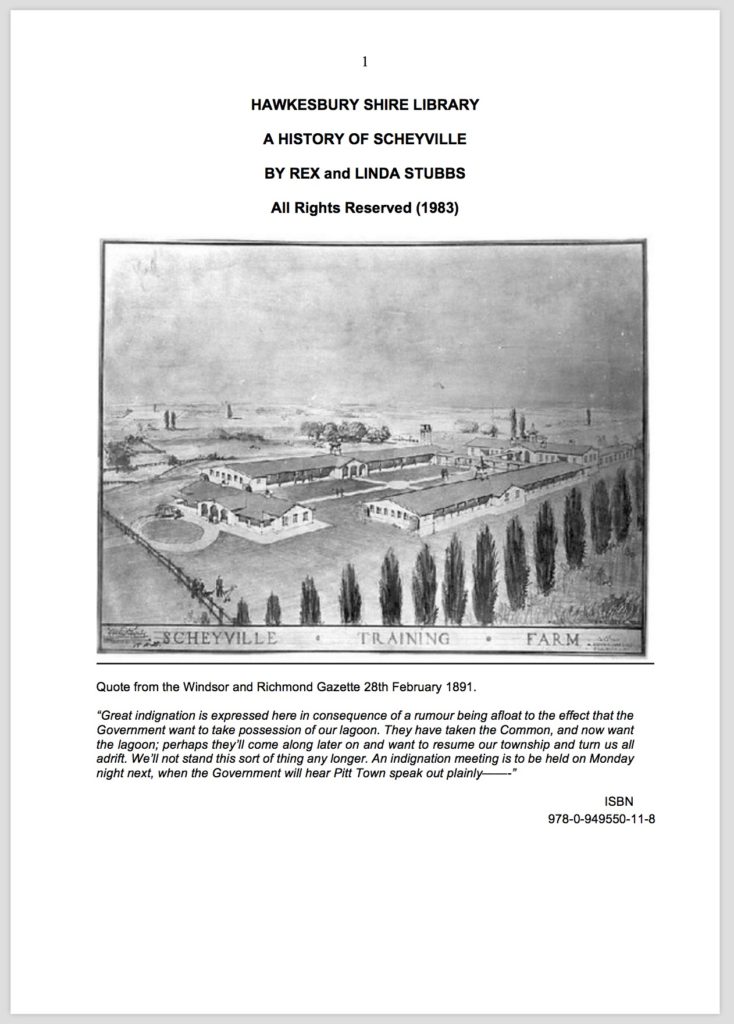
Click the above image for the PDF file.
I owe many thanks to Linda Stubbs for her gracious permission to permit this republishing, and to Kylie Lowe for her editing support.
The book contains several fascinating (and partly forgotten) stories about how the Hawkesbury shaped early Australia; stories which deserve to be more widely known.
Did you know that an early (and failed) experiment in Australian socialism occurred at Pitt Town? If the experiment had succeeded, would Australia have become a Socialist workers paradise?
Did you know about the time that the new Australian government almost literally beat swords into ploughshares by taking money put aside for a battleship and instead spent it on training young British lads to become Aussie farmers? It happened right here.
Did you know about the major military installation, now defunct, that trained young officers such as Jeff Kennett (former Victorian Premier) and Tim Fischer (former Australian Deputy Prime Minister)? Right here in the Hawkesbury.
Did you know that there is an entire ghost town nestled in one of our national parks, which in its day had its own cinema and school, and now abandoned?
If you can, get out to Scheyville National Park one afternoon and walk some of the well-signposted trails that tell the story of this jewel in the Hawkesbury.

Is the Hawkesbury a Shire or are we a City?
I still remember that when I was a kid in 1989, "Hawkesbury Shire Council" changed its name to "Hawkesbury City Council".
I wondered then, as I do now, why we bothered. It seemed a pointless gesture which worked actively against the identity most locals held about the area. I believe it sprang from an erroneous sense of inadequacy, and that we lost nothing by continuing to be known as a Shire.
Did you know the word Shire is a Saxon word, whereas County is its Norman equivalent? And a city, as our late Mayor Rex Stubbs used to explain to me, was a "town large enough to have its main church called a cathedral". Despite Rex's romantic penchant for referring to our historic St Matthew's church (this year celebrating its bicentenary!) as the "Cathedral of the Hawkesbury", I'm afraid I just don't buy it. We don't have to be a city. Let's look at some numbers.
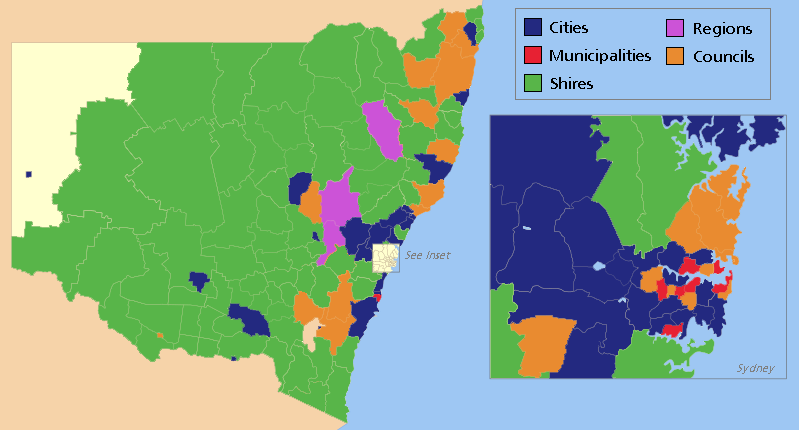
There are (subject to the ongoing vagaries of the Council amalgamation process), presently 128 Councils in NSW. The City of Hawkesbury has a population of 66,134 (per 2015 ABS Statistics). It's just a fact that plenty of Councils bigger than us are perfectly happy to continue to be known as "Shires", even when given recent opportunities to re-name. Look at Hornsby Shire (population: 156,847), Hills Shire Council (169,872), or Sutherland Shire (210,863). The latter is three times our size, and they feel no need to "upgrade". And no-one could accuse our near neighbour in The Hills Shire for being less dynamic or future-oriented. Further, their adherence to the word Shire is not an anachronism, considering they had the opportunity to re-brand themselves as a "city" when they changed from "Baulkham Hills Shire Council" (a name in use since 1906) to "The Hills Shire Council" in November 2008. And look at that area now!
I've always held the belief that the word "Shire" was more pleasant than "City", both for its ancient linguistic roots, but also its evocation of bucolic, open spaces.
The term Shire, in our case, used to reflect the fact that we were precisely not a bustling, congested, urbanised polis. We lay... between. We were between Sydney city proper and the country. The trendy term now in use is "peri-urban", but I find this to be a little pretentious. One could speculate that Tolkien would never have used such a Newspeak word when trying to evoke his sylvan idyll. The recent process I engaged in to draft our new Community Strategic Plan underlined that what we aspire to as our identity is largely defined by our semi-rural aspect. Our mix of habitation, agriculture, and protected environmental spaces is well described with the word "Shire". The word "City" just seems to convey the opposite to me, and, considering our population and neighbours who don't use the word, makes us look more than a little self-conscious.
Should the Hawkesbury remain as a City, or go back to our old name of "Hawkesbury Shire"? I think we should, even while I acknowledge that there is probably little appetite for the change. Further, there would be the cost of changing all our signage, letterheads and other livery -- and I would absolutely oppose that needless expense while we have more important matters to attend to as we pursue long term financial sustainability as a Council.
What do you think? I'm interested in knowing.
Here's a timeline of the naming of our municipality:


About NBN towers and the rollout of fixed wireless

We've all waited far too long for better Internet broadband in the Hawkesbury, especially for many of the rural and acreage properties in the district.
Frustratingly, there isn't much of the newer, faster NBN broadband outside the Richmond/Windsor area, excepting the northern fringe of the larger urban rollout that has petered out just at the southern edge of Oakville. I'm as frustrated as the rest of you -- faster broadband was promised to us years ago, and promised schedules only a year old were broken almost immediately.
NBNCO have been running community information sessions around the Hawkesbury as part of the process of the ongoing build process. I attended one of them recently at Pitt Town Sports Club, but others are being held for pending locations at Maraylya, Wilberforce, Cattai and elsewhere.
The most significant development announced was NBNCO's intention to roll out broadband via what they call "fixed wireless" rather than by the "fibre to the premises" (FTTP) method used to date. Fixed Wireless is supposed to be different in execution to the kind of cellular network you use for your mobile phones -- each tower will serve up to about 100 houses and each house will have a directional dish and a point-to-point link back to the local tower with a guaranteed amount of bandwidth (unlike your cellular mobile phone, where all bandwidth is shared). Unfortunately, fixed wireless at launch will give about half the bandwidth fibre would deliver (50Mbps down and 20Mbps up for fixed wireless, versus 100Mbps down and 40Mbps up for fibre), even though this is still far better than most people are getting now through their ADSL2 connections over Copper. For example, I measured the bandwidth of my ADSL2 connection at Oakville just now using Speedtest.net and got 2.58Mbps down and 0.75Mbps up. That's awful! -- worse than ADSL1, but I know that it's because I'm over 5km from the local exchange. Attenuation over copper is a fundamental limitation of ADSL, so there's nothing to be done about it.
NBN -- in any guise, is a huge step up.

So, it might seem that anyone who was originally promised fibre but is now being offered fixed wireless should feel unhappy. However, NBN officials promised that new-generation wireless technologies (such as 5G) will substantially boost the throughput within only a couple of years, and that customers about to get Fixed-Wireless NBN will be upgraded at that time.
Me? I'm agnostic about technology choices made NBNCO are making because the best new-era broadband for me is the one with the best chance of arriving this decade. I could hold out for something that will never arrive, or would cost me thousands of dollars to switch to. It's already overdue, let's get it done. I suspect most Hawkesbury residents feel the same way.
Anyway, these were the facts laid out at the information session. I was there in my role as a Councillor, but it's worth pointing out that Council has nothing to do with the technology choices NBNCO make, and very little to do with the process as a whole. Council acts as the consent authority for applications to install communication towers, but that's about it. The tower proposed to serve the Maraylya area, for instance, is in the Hills Shire Council area and Hawkesbury Council won't have anything to do with it.
I'm bothering to write about this because of something I learned that had nothing to do with Council. It was something I learned about human behaviour. I have noticed this before but it is newly relevant to me as a public representative.
I've worked in I.T for over 20 years, so I know a bit about technology. I studied Science method for my Masters degree in teaching, and regard myself as a Science nut. And frankly, most of the unhappy people at the (at times heated) community meeting I went to were ignorant of the scientific facts.
I saw a lot of people with genuine, but poorly founded fears about the impact of wireless technologies on their health. Even though they had lived alongside mobile phone towers for decades, they were convinced that these new NBN towers would irradiate them and give them cancer. One gentleman, on the wrong side of 60 or so it seemed, got up and proclaimed that he was worried about the effects of NBN radiation on the motility of his sperm. No, I'm not making this up.
As a politician, angry constituents made angry by something that's Not Their Fault™ are usually seen as grist for the mill, and are a prompt for soap-boxing, tub-thumping and general denunciation of the angriness-causing-thing.
However, on this occasion, I was surprised, and I felt a little embarrassed. These were people I knew personally; who were constituents in my neck of the woods. And they were, as I came to realise as I listened to them, mostly wrong about most of the things they were anxious about. In my opinion, the NBN representatives were saintly in their patience as they fielded the many questions they received, trying to convey scientific facts to a lay audience.
But, misguided fears are not insincere fears, and the people were entitled to answers about whatever they worried about, so let's unpack them.
Radio frequency radiation is regulated by Federal standards to protect public health. The chief body is ARPANSA, the Australian Radiation Protection and Nuclear Safety Agency. ARPANSA has a lot of documentation describing the general risks of RF radiation, and of the risks attendant on NBN wireless technology specifically. It would appear that most people at the meeting either didn't know about that, or specifically chose to be skeptical based on other non-authoritative research they may have done on line.
What troubled me about the tone of the meeting I attended was that some people's Googling was accepted as having as much merit as ARPANSA's authoritative role n determining absolute and relative risk as regards exposure to radiation. People are always free to hold their own opinions, but are not entitled to their own facts. This is an observation we can relate directly to the recent and inexplicable election of Donald Trump.
So let's be clear: The radio technology used in the NBN program is not harmful to human health. I'm convinced of that. If that's the basis of your objection to the NBN, then I'm afraid we just won't agree. No, Council aren't really involved anyway, but that's my view.
As a public representative, my job is to acknowledge the sincerity of concerns expressed to me, regardless of their foundation. I saw a lot of people sincerely worried about whether the move to wireless technologies to deliver the NBN was going to have a harmful health effect on them and their families. I listened carefully. However, rather than siding with them to gain political brownie points, I think it's more important to educate people and to work to dispel their fears with well-explained and factual information. Some people won't thank me for that, but it's the right thing to do. Beyond this, there are undoubted advantages to finally getting the NBN activated for the huge number of Hawkesbury residents living on acreage properties and for whom this can't come soon enough.
So, for what it's worth, I',m fully supportive of the NBN program and so long as wireless technologies eventually provide similar bandwidth as fibre (as we were promised it would), I have no objection to the mode of delivery.
-Councillor Zamprogno.

I love Trump, I hate Trump

November 13, 2016.
Today, I'm talking about Donald Trump. I'm sorry.
And who am I to add to the torrent of commentary that we've already endured on this subject? Especially when the bulk of that commentary, from pundits and pollsters who should have known better, was spectacularly wrong?
Perhaps they were missing something, and in the contemplation of that possibility, I am haunted by an adage:
"There is no cause so right that one cannot find a fool following it."
- Larry Niven.
A week ago, I expressed the view as a Conservative that it might be better if Trump lost the election. I saw... danger. That Trump did not reflect any Conservatism I could support. This has crystallised an emerging sense I've had about what motivates me in politics, and what I stand for. I want to counter those who are desperate to dictate what Trump's election to President does and does not mean for the future of Conservative politics.
Let's start with a useful definition I've leaned on over the years as a first approximation of a Conservative philosophy.
"Competence trumps Ideology".
Apart from the (coincidental) play on words, what I mean is that no amount of high-minded intent is worth a hill of beans without the ability to execute. That Conservatism is interested in what has proven the test of time. That Conservatism is wary of grand theories and radical change.
As a teacher, I offered this truism to my students as a starter for a classroom debate when musing on the question why democracies tend to devolve into binary blocs – two parties of the so-called Left and Right.
The Left, ever thinking with their heart ("Ice cream for everyone, and damn the expense!"), but rarely delivering. Prey to all the traditional follies of socialism, but now adding the corrosive influence of woke culture and its competitive virtue signalling. Poor with money and public administration.
Meanwhile the Right, who regard parsimony as a virtue. Who invariably have to clean up the mess the other mob leave behind when the political pendulum swings back, but rarely do the "vision" thing well. And now, further split between free-marketeers and social (and often religious) conservatives. And whose claim to the mantle of good economic management is only thought safe when resisting the urge to abandon fiscal prudence and keep to small government ideals.
Is this the best we can do?
This point was driven home recently when I read a recent speech by my friend and State MP Dominic Perrottet. He was speaking to the Menzies Research Centre where he called for Conservatives to better articulate their values.
Perrottet said:
"There is a loss of faith in public institutions, the political class and its programme. People feel displaced by rapid changes in the global economy. Establishment parties overseas are perceived as being on a unity ticket – of big government globalism, crony capitalism and minority fundamentalism. The frustrated centre is rejecting this elitist agenda and looking elsewhere for solutions – ending up in the arms of reactionary parties."
Now there is a man with his finger on the pulse, considering that he spoke before the result in America was known.
So, is the choice increasingly reduced to alternating between parties that make high-sounding promises but engender disillusionment when they never deliver, and parties that run a trim ship but are perceived as being heartless econocrats while battling their own religious fringe? Surely we can do better.

I think we can do better. And yet, here is the danger: I believe Trump represents the worst, the absolute worst of both worlds. Because Trump doesn't promise the "both" we're all looking for. He offers neither.
Donald Trump, and the dysfunctional party that backs him is an infuriating mix. Where Trump is right, on Islamic terrorism for example, or immigration, he will have little ability to execute (despite a majority in both houses), and will apply the wrong remedy anyway. He's dead right about the dislocation and disempowerment the working class feel as the result of Globalisation, but betrays his party's philosophical roots by becoming an economic protectionist, ignorant of the benefits of comparative advantage. Trump is like a doctor that diagnoses medical problems well, but whose prescription is obsolete, like leeches and Mercury. His solutions are dead wrong, even when his diagnosis is spot-on. And where he is wrong – such as on renewable energy, or universal health coverage, or nuclear proliferation, his powers will be limited to undoing the work of others rather than proposing any better fix. I predict an ongoing split within the Republicans and an attempt at impeachment within this Presidential term. It's a dreadful situation.
Rounding our the danger is Trump's sneering anti-intellectualism, which I find contemptible.
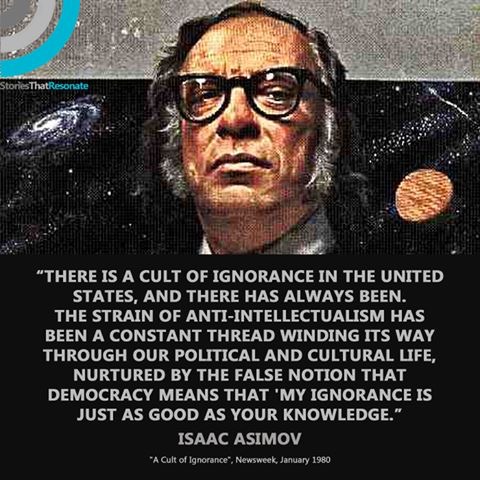
Only Trump could suggest a young earth creationist as Secretary for Education. Or a climate-change skeptic and oil magnate to be in charge of the environment. This proud know-nothingism lays at the core of the paradox that makes America simultaneously the smartest nation on earth and the dumbest at the same time.
I oppose Trump, even as a capital "C" Conservative because I can't throw my weight behind a person who barely respects rationality, let alone Science; Who sees conspiracy theories in every corner; Who shows no sign of thinking deeply on almost any subject; Who thinks, like Creon in Sophocles' Antigone, that his definition of loyalty to the state can be defined by his personal prejudices – and that to be outside that is treason.
And lastly, and no less important: because Trump acts as a poor role model because of his gross disrespect for women.
By any objective measure, Trump is a lightweight, vulgar con artist.
On the other hand, I feel conflicted because Trump has exploited a legitimate resentment, which I share, that has built over recent decades towards modern fads. Competitive virtue-signalling, political correctness, victim-fetishism, identity politics, polyculturalism masquerading as multiculturalism – these have all poisoned the well of our polity. The pushback has come from people who are sick of the moral superiority asserted by regressive leftists through their lecturing about "microaggressions", "deplatforming", "safe spaces", or their refusal to mount a muscular defence of Western civilisation in favour of appeasement towards Islamic fundamentalism. Look no further than the abuses of section 18C of the Racial Discrimination Act for proof that this problem extends to Australia.
Analogous, well held concerns about the downside of globalisation and the need for sovereign autonomy among nation states contributed to the UK voting for Brexit in June. (Parenthetically, Australia can only benefit from a renewed and independent Britain as a member of the club of English-speaking peoples of the Commonwealth.)
So on some of these broader questions, Trump is right. Yet still, I think he is absolutely the wrong standard-bearer for Western Civilisation. It's an invidious situation, and the world will become a more dangerous place while he remains President.
How did we get here? How did Americans, in an era where fact-checks are available on everyone's smartphones, elect a man who could deny in one breath what he had said in the previous one, and then stick his chin out when he was called a liar? Specifically, how do religiously conservative voters reconcile the cognitive dissonance of supporting a man with so few scruples? I recall the advice of my favourite author, Robert Heinlein:
“The America of my time line is a laboratory example of what can happen to democracies; and what has eventually happened to all perfect democracies throughout all histories. A perfect democracy, a ‘warm body’ democracy in which every adult may vote and all votes count equally, has no internal feedback for self-correction. It depends solely on the wisdom and self-restraint of citizens… which is opposed by the folly and lack of self-restraint of other citizens. What is supposed to happen in a democracy is that each sovereign citizen will always vote in the public interest for the safety and welfare of all. But what does happen is that he votes his own self-interest as he sees it… which for the majority translates as ‘Bread and Circuses.’
‘Bread and Circuses’ is the cancer of democracy, the fatal disease for which there is no cure. Democracy often works beautifully at first. But once a state extends the franchise to every warm body, be he producer or parasite, that day marks the beginning of the end of the state. For when the plebs discover that they can vote themselves bread and circuses without limit and that the productive members of the body politic cannot stop them, they will do so, until the state bleeds to death, or in its weakened condition the state succumbs to an invader—the barbarians enter Rome.”
I also recall my Spinoza:
"Faith requires not so much true dogmas as pious dogmas, that is, such as move the heart to obedience; and this is so even if many of those beliefs contain not a shadow of proof."
I lament that this election heralds an era where factual correctness, moral rectitude, or depth of insight are explicitly rejected as necessary for high office.
So what's the alternative?
What would a conservative leader who actually knew their history look like? Who was as likely to quote Scruton or A.C Grayling as Hayek or Von Mises in supporting their worldview? Who, if they had to seek a sense of the numinous, looked to the revelations of the Large Hadron Collider, the Hubble Telescope or a gene sequencer before they looked to a holy book? Carl Sagan said "Science, properly practiced, is a kind of informed worship". Why can't that be enough? Why can't we have a Conservative leader whose hero is Carl Sagan or Neil DeGrasse Tyson? Why should they "belong" to the Left? Science is cool!
What would a conservative leader look like who spoke unapologetically about Western Civilisation being objectively, measurably better that its alternatives? Who was able to demolish the intellectual impostures of cultural relativism and postmodernism, and who built and articulated an intelligent and publicly compelling case for the subsequent and necessary decisions on immigration, foreign policy and defence, instead of calling names and threatening political opponents with gaol?
A leader who, as John Howard says “Can win arguments, not just elections.”
What would a conservative leader look like who understood that we live in a society, not just an economy, and who admits that although free-markets consistently deliver greater wealth, some regulation and accountability are necessary to ensure that this wealth is not distributed unfairly? Who can admit that universal health-care is not socialism, but rather something that many countries have supported with bilateral zeal for half a century? That such boons are the patrimony of prosperous and humane societies?
What would a conservative leader look like who was prepared to address existential threats to civilisation such as overpopulation, climate change or resource depletion, but did so honestly? Who understood that our fundamental duty is to the generation after our own, more even than to our own? Who prioritises science funding, and space exploration? Who acknowledges our Judeo-Christian heritage at the same time as respecting the necessity of separation between church and state? Who was welcome to be a practicing Christian, but refused to wear it on their sleeve or ram it down your throat?
Whose attention span was longer than a tweet?
Maybe I'm asking too much. Maybe I'm asking for a conservative Jeb Bartlett. Maybe I'm fantasising that the nightmare will end when the Trump suit is unzipped, and a smiling Alan Alda steps out, miming finger guns to an appreciative crowd.
The left beat the pants off us in this regard. Again, returning to Perrottet's speech:
"[The left's] original aim of social justice, through helping the working class, has been left far behind. Today they cloak their politics in the sweet rhetoric of fairness, equality and tolerance – but their agenda is far from benign. They are motivated now by a burning hostility to our culture and heritage. It’s no coincidence they want to redesign our flag, rewrite our anthem, remove ANZAC Day, replace our constitution, repudiate our Judeo-Christian heritage, and rename our national day."
I agree that the militant left have precisely this agenda, and my gut feeling is that there is a hidden majority in the sensible centre of the Australian electorate who are as repelled by this agenda as I am. The electoral dividend residing in that distaste for social engineering is the Liberal Party's for the taking.
But I cannot see Trump as anyone's solution to these problems (and let me emphasise, this is no endorsement of Hillary Clinton).
Conservatism for me has nothing to do with "preserving marriage as sacred between a man and a woman". For pities sake... Let people live their lives. Aren't right of centre parties the parties of individual liberty? Of mitigating the State's influence in your personal lives? Grow up and stop pruriently caring about what happens in other people's bedrooms. It's none of your business. And don't say "think of the children". Kids with gay parents turn out just fine.
But Conservatism has everything to do with acknowledging the wisdom that our future comes from our past, and that there is value in a sense of continuity and connection with our heritage. That we respect the intent and work of our forebears, even while we innovate and update our sense of "what can be" for Western Civilisation. The Crown, the Constitution, and our inheritance from the Enlightenment are worth defending, because they have given us health, wealth and (relative) peace for over a century. That's something Australians should be more proud of than they are.
Conservatism should have little to do with blindly following free-market economics, but should seek to temper economic rationalism with a humane core. We should recognise the inherent value in some less tangible things and practices that provide enduring value – anchors to the way we want to live. Preserving the semi-rural lands in our city, and the viability of agriculture within the greater circle of the Sydney metropolitan area would be a good local example.
Conservatism should be about an absolute commitment to balancing our budgets and living within our means as the surest way of preserving intergenerational equity, but it shouldn't be about driving efficiency at any cost, because the electorate will spit you out. Witness the huge electoral damage of pushing unpopular Council amalgamations in NSW as proof. A huge, and easily avoided mistake.
Conservatism should be about preserving an absolute right to free speech, and being confident enough in the force of our arguments to never seek to censor. If your inclination is to say "I'm offended" when you are contradicted rather than offer a rebuttal, maybe you're just wrong and won't admit it. Censorship robs us all of our right to see bad ideas fail in a fair fight in the public square.
Lastly, Conservatism should be about governing for everybody, because when the pie is bigger, everyone gets a bigger slice. As Perrottet noted, a famous Australian politician once said:
“This country has great obligations to the weak,the sick, the unfortunate. It must give them all the sustenance and support it can…. to every good citizen the state owes not only a chance in life but a self respecting life”

The Hindu Temple at McGraths Hill
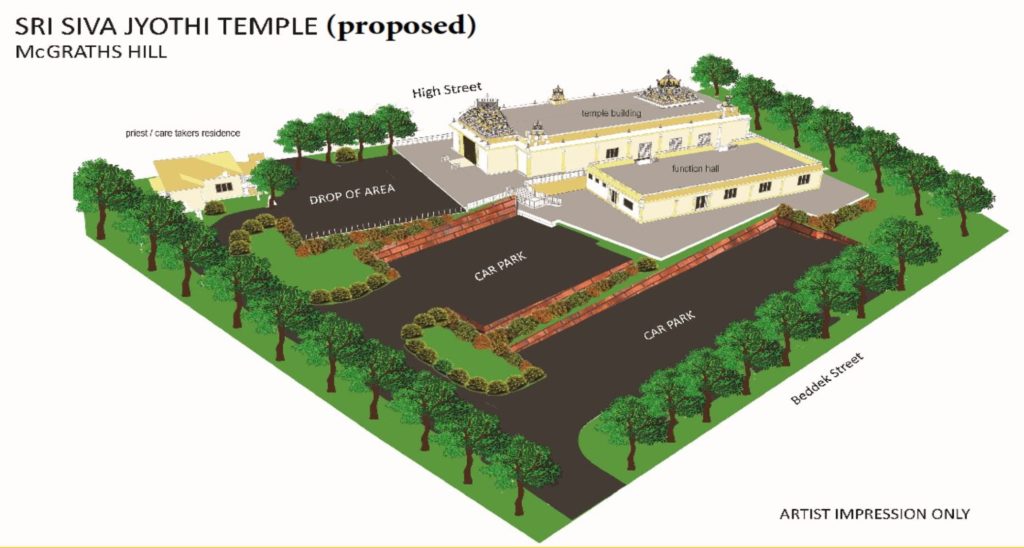
The proposal to build a Hindu temple in High street in McGraths Hill came before Council at the last meeting and was narrowly approved. The vote was tied six-all and was approved on the Mayor's casting vote. I spoke and voted against the proposal. The councillors who voted for and against the proposal are listed in the following table:
|
Voted for the Hindu temple |
Voted against the proposal |
| Councillor Barry Calvert (Labor) | Councillor Paul Rasmussen (Ind) |
| Councillor Patrick Conolly (Lib) | Councillor John Ross (Ind) |
| Councillor Amanda Kotlash (Labor) | Councillor Emma-Jane Garrow (Ind) |
| Councillor Lyons-Buckett (Ind) | Councillor Peter Reynolds (Ind/Labor) |
| Councillor Sarah Richards (Lib) | Councillor Danielle Wheeler (Greens) |
| Councillor Tiffany Tree (Lib) | Councillor Nathan Zamprogno (Lib) |
There is no doubt that this matter has been divisive, and I am aware of the strength of feeling that was expressed at the meeting from the gallery and on social media. However, my job was to examine the application before me and to consider it on its merits.
Tonight, I had the opportunity to attend a public meeting at McGraths Hill where the community expressed its frustration at the approval of a development with so many flaws. Only one other Councillor, Clr. Ross, was present.

I felt quite proud of the civility with which people spoke. These were ordinary people-- tradies, retirees and professionals, voicing well-thought-through concerns about their perception of deficiencies in leadership and of process at Council. Neither race nor religion were mentioned, nor was any bigotry manifested. The most common sentiment expressed was "great idea, wrong spot". Frankly, apart from a very small minority of noisy online ranters who were not even present at the meeting tonight, the stereotype of "objectors as racists" was completely disproven.
This post does not intend to prosecute the argument for or against the development, nor to reflect on my worthy colleagues who were entitled to vote as they chose. We differed in opinion-- and were entitled to. This is the process we engage in.
However, I will say that the purpose of this website is to communicate with the community. Each Councillor must account for the stance they have taken to their electorate, and I was glad to be able to stand among local residents and answer to them. A recording of my (brief) remarks are below:
Finding common ground on Windsor Bridge

There is no more controversial issue before the new council than the project to replace Windsor Bridge. It is an issue that has tested friendships, inflamed passions within the community, and created a protest movement that uses every trick in its playbook to prevent the project proceeding.
There will be much more to say on the matter of the bridge, and of the larger issues it augurs relating to the future of our district. I hold particular views on the subject, but this post makes no argument. Yet.
And why? Because there are seven new councillors on council, myself included. I feel that the first step, the step that must occur before a substantive debate about the bridge occurs, must be for the new council to be properly briefed by the relevant departments.
So, at the council meeting on Tuesday, I moved my first Notice Of Motion which called for a briefing to be given to us on the project. I asked that the briefing be held either in Thompson Square, or in Chambers (or both), and that relevant RMS, ministry and council staff be present. Councillor Richards and Councillor Reynolds had moved similar motions of a more limited scope, relating generally to support for an extra river crossing, and relating to an overall traffic strategy respectively. I am pleased that both of those councillors acknowledged that my own motion encompassed their concerns, and with their permission and certain amendments, they withdrew their motions and the following was put:
"That Council:
Support an additional crossing of the Hawkesbury River.
- A Councillor Briefing, incorporating presentations from relevant RMS and Council staff be held to provide details on the current status of the Windsor Bridge project.
- This Briefing should address project status, heritage, traffic performance, design and aesthetic issues (including open space) and maintenance responsibilities.
- A further Briefing be held for RMS and Transport for NSW officers to outline options and planning for future river crossings including commentary on the impacts of proceeding with the current Windsor Bridge replacement.
- That Briefing canvas the various options to give substantive effect to achieving the actions and funding of studies and investigations."
My background to the motion, furnished to assist my colleagues to understand why this was important, stated:
"The state of the Windsor Bridge replacement project is the most contentious issue before the new Council. The expectation of some is that Council should quickly resolve to reverse its former support for Option 1 and now formally oppose the project.
With seven new Councillors in the new term, there is clear merit in receiving a briefing on this issue before such a resolution comes before the Council, especially when it seems obvious there is sincere disagreement on some matters of fact.
To assist the General Manager identify which public officials should be invited to best achieve the briefing’s purpose, and to permit those officials to be adequately prepared, it is proposed the matters to be discussed could include (but not be limited to):
- The current state of the bridge replacement project (true cost and timeframe).
- How the project is identifying and conserving the heritage of Thompson square.
- The status of nearby heritage items, including number 10 Bridge St, the colonial era drainage works, the School of Arts steps, and the remnants of Greenway’s wharf.
- The evidentiary basis for predictions relating to improved traffic flow.
- The adequacy of the project to deal with projected traffic flows on a multi-decade horizon.
- The proposed aesthetic qualities, form, fabric, scale and position of the new bridge.
- How the project will manage the slope between the upper part of Thompson square park and the water.
- What ongoing input Council can have in ensuring the renewed precinct will suit the communities’ needs as regards amenity, aesthetic design (stone, ironwork, landscaping etc), tourism, mobility access, parking, historical interpretation and so on – which will be Council’s responsibility to manage after State-managed works are complete.
- What the options are for a longer term plan for future river crossings, such as the suggestion that an additional crossing form part of the feasibility investigations for the M9 orbital.
- What the cost of Option 8 from the 2011 RTA study would have been, which was for a downstream bridge near Pitt Town, and how it compares to the likely final cost of Option 1.
- Whether the time-frame or funding of such a future crossing is in any way affected by the completion or cancellation of the current bridge replacement project."
I am well aware that feelings run strong on this issue, and my expectation is that those councillors who oppose the project should and will ask many pointed questions when the briefing is held. I hope they do! Ultimately, eleven of the councillors voted in favour of my motion, which is pleasing.
The sole vote against the councillors receiving this briefing came from CAWB member, John Ross. I'll repeat that: On the very issue that elected Clr. Ross to Council, my worthy colleague voted against councillors even receiving a briefing, even after I had made it clear that it must be regarded as the first step towards a productive, rather than an angry and sterile, debate.
I will have much more to say on the subject of Windsor Bridge, but I will do so after this briefing has been given.
About the Redbank development at North Richmond

Last Tuesday was the first public meeting where we new councillors addressed regular council business. It went from 6:30pm until well after midnight, owing to the backlog of matters created by the election, and a helping of deferred matters gifted from the previous council.
I remarked at the meeting that this was a baptism of fire, as immediately before us was arguably one of the most contentious issues facing the new council: The Redbank development at North Richmond. The specific item before us on Tuesday were ten blocks in an area called "The Gallery" which back on to the RSL Retirement village. The retirement village residents objected that they had secured their houses in the belief that the land behind them would be left as empty space. They also objected on the grounds privacy, drainage and noise, given that the land slopes upward behind them and a retaining wall has been constructed.
The previous week I had inspected the site and, despite arriving unannounced, the site manager Scott was gracious in receiving me and showing me around. I also spoke to various residents living in the RSL village in Catalina Avenue, who showed me the promotional material the RSL offered them. It did indeed show a layout of the Redbank site with the land in dispute left open-- such as the image at the header of this post.
The recommendation from Council staff was to approve the subdivision -- or rather to ratify it, since we were told that the blocks had been sold and the new owners were waiting to build. I was informed that the original approval body of this part of the subdivision was not Council, but a State body called the JRPP (Joint Regional Planning Panel), who take planning decisions out of the hands of Councils if the value of a development is over $20 million.
Meantime, the deferral of this matter by the previous council was taken as a deemed refusal and the developers had commenced litigation in the Land and Environment Court. If the litigation proceeds, legal costs could be considerable to council.
I expressed my anger at the meeting that the JRPP did not take up the issue of why the development they were asked to approve in early 2014 was at such variance with the prospectus offered RSL village purchasers. The village residents have every right to be aggrieved that the material was misleading. My understanding is that the RSL have acknowledged this and have offered the residents the option to move and gain a refund. But surely this is cold comfort for many of those residents who have considerable sunk cost in their new homes and who probably regarded their last move of house as their last.
To determine who has perpetrated a deception on whom is not simple. I believe the testimony of the residents when they say that they were given an indication that the land would be open, both in terms of the brochure they showed me, and verbally. I disagree with the statement in the Council business paper which says
"Investigation from Council staff has not found evidence that sales person's advice had made this claim [that the land would be left open]"
However, on the other side, there are other factors which should be taken into account:
- The land was always zoned for potential subdivision, and the residents should have known that this was a permitted and likely use of that land when they bought adjacent to it.
- The residents bought-in after the Redbank development was approved (I'm awaiting definite dates here, but the developer says the JRPP approved it in early 2014 and the date one resident quoted me for their settlement was August 2014), and their solicitor could have found out the subject land was sub-dividable (but there is the legitimate riposte that they had received a verbal undertaking that the land would be free and did not think to check).
- The material which misled them was produced by RSL Lifecare, and the developers of the subject properties on Tuesday's D.A's are an unrelated party, and that recourse should be made by the RSL.
- That a complaint was made to Fair Trading about the deceptive promotional material, but that at this stage, the claim has not been upheld. I disagree, and would encourage the residents to pursue those avenues of appeal that Fair Trading indicated.
- That the developer's right to build on the lots approved by the JRPP is probably strong and a court case will be unlikely to negate it, but will be costly.
After balancing these concerns, I voted to approve the subdivision, but remarked that we metaphorically had a gun to our heads. I wasn't happy about it, but felt we had to do it. I didn't believe deferring or refusing it would alter the outcome, as regrettable as it is for the residents of Catalina avenue.
I am heartened, however, to hear that related issues concerning noise, drainage, and the screen planting between the fence and the retaining wall are all matters the developer is still happy to address with the residents as the matter comes to conciliation in the court.
The residents are entitled to think that the whole system has failed them. From their perspective, the RSL misled them and offered a remedy unpalatable to them. The JRPP should have been where the difference between the RSL prospectus and the developer's request were questioned, but weren't. The matter was dumped in the old Council's lap and then deferred to the new Council, who have again deferred it.
If the entirety of the Redbank decision had been mine to make years ago, I would have said no. However, that is a whole other question. On Tuesday, I was focused on the application before me, and nothing else.
As one of my worthy colleagues said during the meeting: "This is an example of how not to do things". I agree.

Elected to Hawkesbury River County Council

At the Council meeting held on October 11, 2016 a preferential ballot was held to elect the Council's delegates to the Hawkesbury River County Council. I am pleased to say I was elected as one of Council's two delegates for the four year term.
The County Council operates effectively as a Council body in its own right, and its elected representatives are sent from the Councils in Hawkesbury, Blacktown, Penrith, and the Hills.
The Council's remit is largely concerned with weed management in the waterways of the Hawkesbury Nepean river and its tributaries. I am proud to be one of our community's representatives to this body.
Fitzgerald Aged Care branding launch
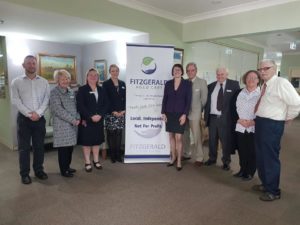
The "Photo-Op". Is there anything more clichéd and typical of the politician's photo album?
You get invited to the opening or commemoration of something in which you can take next to no credit, and you pose, mugging for the camera in the hope that your Mum (or better still, a voter) sees you in the paper/ social media afterwards. I suppose I should resign myself to this early. Sometimes, people are right to be cynical.
But perhaps there's something else going on here. Let's explore.
I attended my first outside function as a Councillor this week when I attended the launch of the revamped branding of the Fitzgerald Aged Care facility. I learned about their plans for ongoing improvements at their premises in Rum Corp Lane in Windsor. Despite having driven past the place all my life, I had never been there, tucked in there as it is behind the Sebel. I was unaware, for example, of the amazingly long history of the organisation out of which Fitzgerald had grown, dating back to the formation of the Hawkesbury Benevolent Society at a public meeting in 1818. This society had as its sole object "the support and relief by voluntary contributions of all real objects of charity in the Hawkesbury district" and "for the relief of such poor persons belonging to the district as through age, accident or infirmity (who) are unable to support themselves". It is pleasing to think that a body formed for that purpose two centuries ago is still discharging its duty!
If I had not been invited to that launch, I would not have been spurred to lose an evening diving into Trove and beginning a study of the storied history of the Society from which the present organisation descended. Fascinating.
As I attended the launch, I also heard from the residents, board members and staff of how the culture of Fitzgerald was distinctive for the commitment and kindness shown to its residents, and the friendliness and professionalism shown by the staff. I was particularly pleased to make the re-acquaintance of the Board President Dr Jules Whitty, whom I knew in his days as a surgeon, as he reminded me that as an independent facility, the challenge to remain modern and well resourced was constant. My new colleague on Council, Clr. Sarah Richards has also been a member of the board on and off for some years and her pride in the work of Fitzgerald was plain.
So there's a better reason why a newbie politician like me should go to photo ops like these. It's not about me. It's about giving some recognition to people and organisations who plug away doing worthy things with less thanks than they deserve. Did you know about this hidden gem in our local community? I didn't, and now I have a better appreciation for it, and for the staff and board who work so tirelessly for its betterment. Worth standing there for a photo.
Where I'm coming from
This is my first post, and I wondered how I might begin. A bout of spring cleaning supplied my answer.
As I was digging around in my shed, by happy coincidence I found a flier that I used when I first ran for Council in 1995. I was 22.

Good god, in 1995, I had a pony tail. Stop it. Stop laughing.
I cringe a little when I look back and think of how earnest and callow I was back then, but I also feel some pride that the things that mattered to me, and upon which I was prepared to advance myself for public office, have not changed all that much in the intervening decades.
And here's something I forgot existed: Part of the web page I created for my next run in 1999:
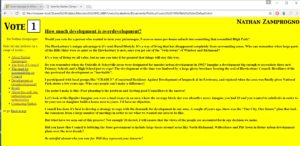
Cringe. I am. A lot of high-minded, rather snarky rhetoric not particularly backed by life experience. But again, some premonition of things that are still important to me now: a concern for preserving the semi-rural amenity of our district, a seeking of balance between the contending forces of progress and conservation in our district, and a strong belief in making our elected leaders accountable. Missing, perhaps, was an appreciation of the benefits of a growing, thriving economy, the advantages of limited development accompanied by proper planning, or a knowledge of how local realpolitik works.
This is a snapshot of where I come from.
Here's another: I was deeply influenced during my childhood by growing up in part at my grandparent's property at Glenhaven, nearby in the Hills District. My personal heritage spans the Hills and the Hawkesbury in equal measure. Seeing Glenhaven built out begninng in the 1980s, and seeing it lose its semi-rural aspect in the name of progress broke my heart. I have written about my childhood experiences growing up there in several articles. Here's one, A Bouquet for Jacarandas, and another, Abandoning the Cubby. Those links are to my personal blog, where I have occasionally made political commentary, but now all my political posts will be here. Yes, I have eclectic tastes.
The two greatest influences upon me, politically, were my grandfather Harry Holland, and former Hawkesbury Mayor, Doctor and friend, Rex Stubbs. Both were deeply invested in their communities and exemplified the kind of common sense needed in public life. Both have passed from us, sadly, and I miss them both terribly. But my hope is to deliberate and act in such a way as would have made them proud. I remembered my late grandfather in this article, written 20 years after he died, and about Dr Rex Stubbs in this piece I wrote when he died in 2010.
If, in public life, I ever show an inclination to be untrue to the convictions I gained in my youth, or from those who mentored me, please remind me.
-Nathan Zamprogno